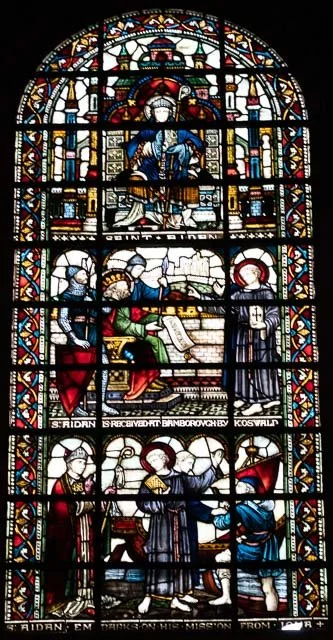
The cathedral is the successor to the Anglo-Saxon Lindisfarne Priory, which was established c. 635 but abandoned in 875 in the face of Viking raids. The monks settled at Chester-le-Street from 882 until 995, when they moved to Durham.
The cathedral remained a monastery until it was dissolved in 1541, since when it has been governed by a dean and chapter.
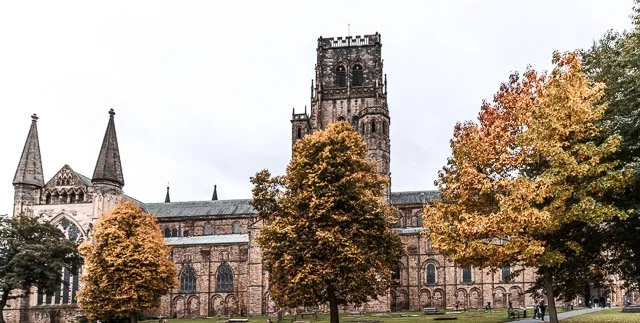
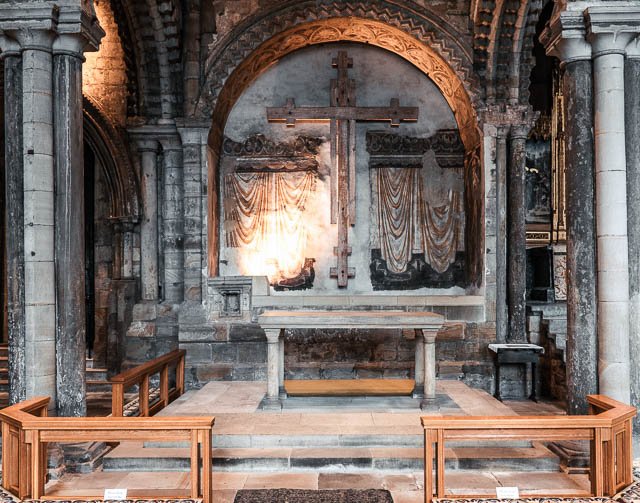
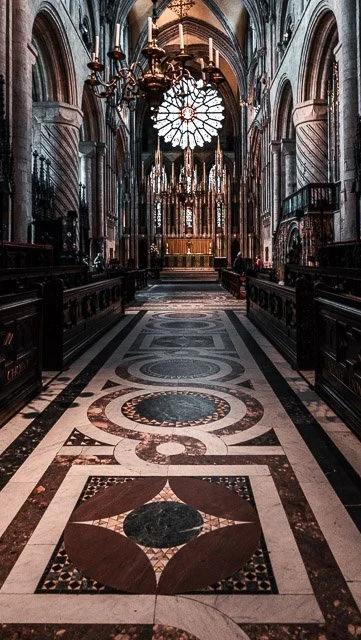
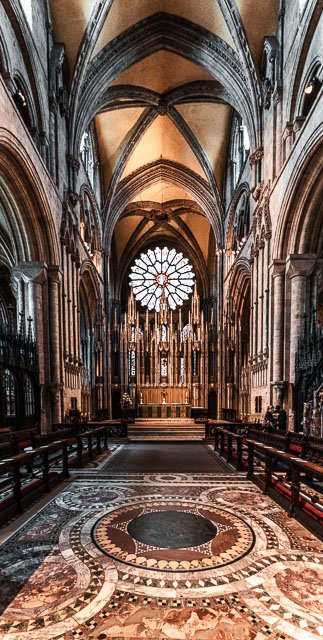
A substantial part of the present building was completed between 1093 and 1133, replacing the Anglo-Saxon "White Church". It is an example of the Romanesque architectural style, and the nave ceiling is the earliest surviving example of a pointed rib vault.
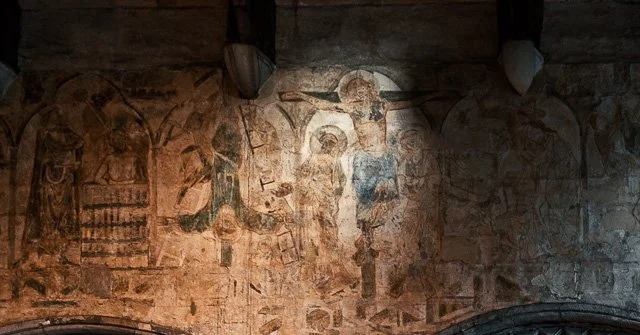
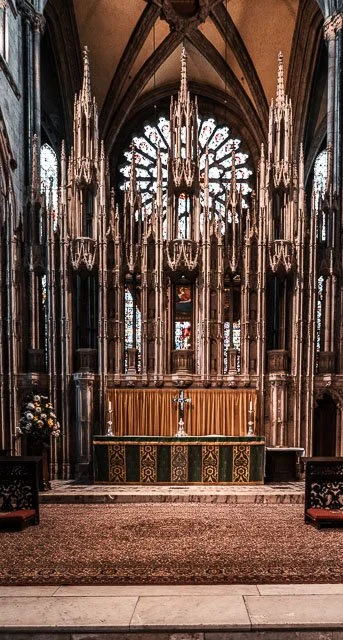
The Galilee chapel was added to the west end of the cathedral in the 1170s, and the western towers built in approximately 1200. The east end was expanded in the Early English Gothic style in the 1230s, and the Perpendicular Gothic central tower was built in two stages in the fifteenth century.